


Back to the Bullseye: What Target Can Relearn from Its Founding Principles
Fifty years ago one of the founders of McMillanDoolittle, Norm McMillan, worked with the leadership team at Dayton Hudson on the strategic direction of their fast-growing discount retail concept called Target. One of the key outputs of that work was a remarkable document titled “Guides for Growth”. Signed in January 1977 by the Target leadership team and Norm, the document was not a traditional business plan. It was a declaration of philosophy: a clear articulation of what Target would stand for, who it would serve, and how it intended to grow. These are the principles that led Target to become one of America’s most distinctive retailers: respect for the customer, operational discipline, merchandising clarity, and common sense.

Image Source: Target
Reading the document today is striking because it feels incredibly timely. Today Target is facing slowing traffic, margin pressure, inconsistent store execution, and a weakening sense of differentiation. In this context, the original Guides for Growth reads like a roadmap back to relevance. Target’s founders intended the concept to compete on trust, style, operational excellence, emotional connection, and what the document repeatedly calls “common sense.” In many ways, the retailer’s recent struggles can be traced to drifting away from these original principles.
Respect Was the Strategy

Image Source: Target
One of the most powerful statements in the document reflects a relentless focus on understanding and relating to shoppers. Very simply stated: “Target respects the people who shop its stores.” The document goes on to say: “We respect our customers’ economic power and the fact that their decisions control our destiny.” That respect showed up in very practical ways: clean stores, helpful signage, moments of delight, and consistent quality. Target’s founders understood that shoppers experience the brand through key moments like checkout lines, in-stock conditions, fitting rooms and engagement with associates. For decades, Target made discount retail feel clean, optimistic, easy, and emotionally uplifting. That was the brand.
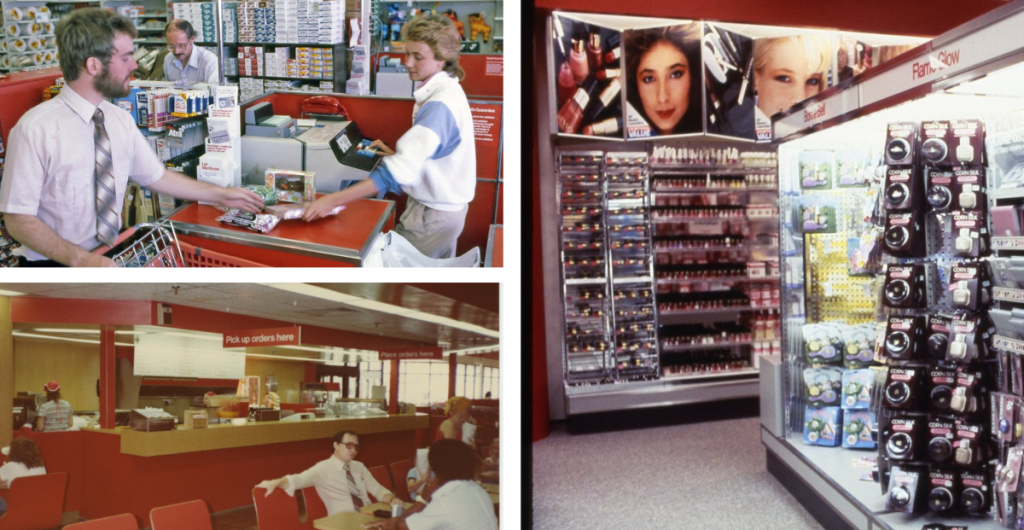
Image Source: Target
Friction Is the Enemy of Respect
Today, many of Target’s challenges show up as friction: locked merchandise cases, fulfillment carts in the aisles, inconsistent inventory availability, understaffed departments, long checkout waits. The original Guides for Growth warned against this directly:“ Anything that gets in the road of this fast exit is to be regarded as interference.” That line feels written for today’s retail world and applies across both physical and digital channels. Target’s challenge is not just improving operational efficiency. It is restoring the emotional ease that once made the brand so distinctive.
Style is the Differentiator
The document described Target as: “A store for the young, the mobile, the active, the confident, the fashion conscious.” It also described customers who valued quality, knew price, lived casually, and wanted style without extravagance. This was the foundation of “Design for Less.” Target was never meant to be merely cheaper. It was meant to be smarter, more stylish, and more emotionally connected than traditional discount retail.

Image Source: Target
That formula depends on merchandising conviction. The original document emphasized “dominance in the merchandise customers want most,” “appropriate presentation,” and “the right merchandise, at the right time, in the right quantities.” In other words, Target won because customers trusted its taste. The way back is not simply more promotions or sharper prices. It is stronger curation, clearer presentation, improved owned brands, greater trend and freshness authority, and more moments of discovery throughout the store. Target is especially challenged to deliver this in the grocery categories.

Image Source: Target
Common Sense Still Matters
One of the most revealing sections of Guides for Growth was titled: “A Special Rule of Common Sense.” The document stated: “We intend to be meaningful, important, and needed by young families. We will be in keeping with the value systems of our young family-oriented customers.” This was not about avoiding change. It was about understanding the customer deeply enough to remain broadly accessible, emotionally comfortable, and trusted. For decades, Target balanced this well. It felt modern and culturally aware without losing its family-oriented appeal.
In recent years, Target has increasingly found itself at the center of broader cultural and political debates. Regardless of viewpoint, the effect has been that the retail experience itself has sometimes become secondary to public controversy. The original guides offer a useful reminder: the issue is not whether companies should have values. The issue is whether customers still feel understood.

Image Source: Target
The Path Forward Is Rediscovery
Target still has enormous strengths: powerful brand awareness, strong owned brands, national scale, emotional equity, and a differentiated design heritage. Its next chapter will depend on returning to the principles that made Target unique:
- Respect the customer.
- Curate with conviction.
- Simplify the experience.
- Apply common sense.
- Make stores emotionally uplifting.
- Build trust through consistency.
The final page of Guides for Growth states:
“This is what we will stand for; it is how Target intends to grow.”
Despite the expansive changes in retail over the last 50 years, the remarkable thing about the document is how many of Target’s original ideas still feel exactly right. For the retail industry, the lesson is clear: growth strategy is not just about new capabilities. It is about disciplined alignment between customer promise, operating model, merchandising, culture, and experience.
That is where McMillanDoolittle’s work has always focused: helping retailers clarify what they stand for, understand who they serve, and translate strategy into experiences customers can feel delivered by a consistent and profitable operating model. Target’s history is a powerful reminder that the strongest retail concepts are built not only on innovation, but on enduring principles executed consistently.
At McMillanDoolittle, we help brands and retailers navigate transformation and redefine their positioning for the future. If your business is exploring new customer engagement strategies or retail formats, let’s connect.

Joe McKinney
June 25, 2026 at 3:05 pmDear Mara,
You are absolutely right! As a senior buyer at Target Stores in the 1980’s, we were all guided by the “Guides for Growth” and the management team that lived by them, as we all did also.
The simplicity of direction, the respect for the customer, and the acknowledgement that only the customers supplied the business lifeblood–their hard earned cash–simplicity of focus, supported by industry leading I/T systems, and true diversity of staffing backgrounds, it was a fabulous organization and team.
Thank you for your essay.
All the best,
Joe
Mara Devitt
June 29, 2026 at 9:31 amThank for the comment and insights Joe – it must have been a wonderful place to work at that time.