

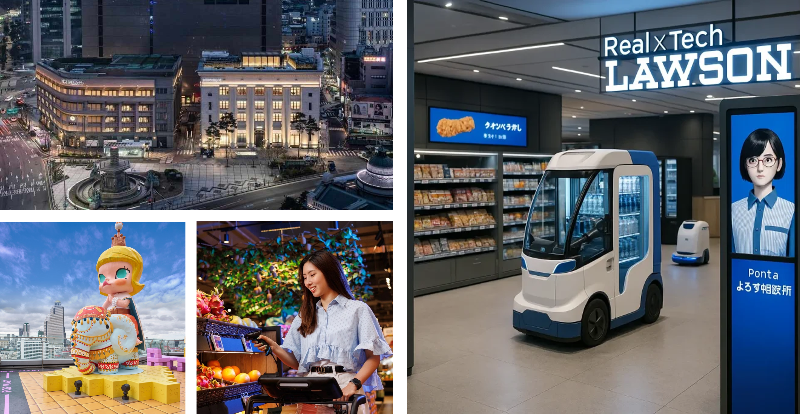
Asia’s Retail Revolution: Four Retailers That Signal the Future of Stores
Across Asia, retailers are redesigning stores from the ground up, rethinking how people shop, how employees work, and what a physical store is meant to be. From Singapore to Seoul, the store is no longer just a place to buy things. It is becoming a platform for service, experience, and engagement. The retailers leading this change are not abandoning physical retail, but redefining what it can be.
Here are four examples that show just how fast things are moving:
- FairPrice Group: The AI-Powered Supermarket

Image Source: FairPrice Group
In Singapore, FairPrice Group, founded to keep daily essentials affordable, has introduced the “Store of Tomorrow,” a supermarket built around generative AI.
Smart carts guide shoppers through the store, offer promotions, and support scan-and-go checkout while digital shelves adjust in real time, and in-store assistants provide tailored recommendations. Behind the scenes, vision systems track inventory and service gaps so staff can fix problems before shoppers notice them.
The result is a grocery experience that blends the speed of e-commerce with the familiarity of a neighborhood store, reducing friction for customers while helping employees focus where they’re needed most. In a tight labor market like Singapore’s, FairPrice’s Store of Tomorrow reimagines grocery shopping and provides a prototype for digitally mature markets to adopt.
- Lawson: Reinventing the Convenience Store
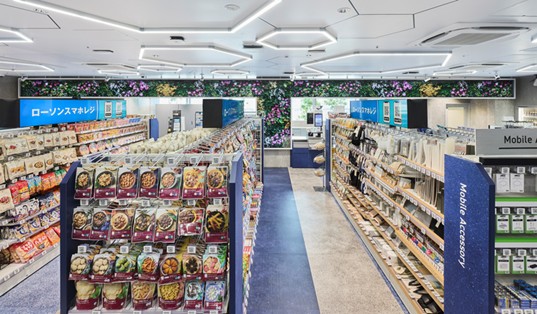
Image Source: Lawson
Faced with an aging population and ongoing labor shortages, Japan’s Lawson created the Real x Tech Store, developed with KDDI and Mitsubishi Corporation, as a next-generation convenience store integrating automation, AI, and remote service support.
Robotics handle repetitive tasks like cooking and cleaning, AI helps optimize ordering, staffing, and product placement, and digital signage adjusts recommendations in real time. And remote staff, represented by 3D avatars, assists customers at self-checkout.
The Real x Tech Store is a highly automated model that still preserves a sense of personal service. Japan has often been an early indicator of demographic change and Lawson’s approach offers a glimpse of how convenience retail may evolve in dense, labor-constrained markets around the world.
- Shinsegae: Turning Retail into Cultural Experience
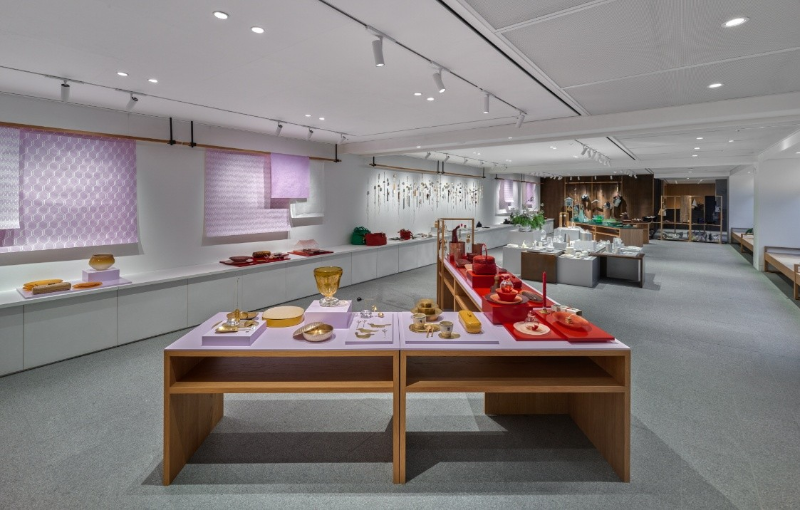
Image Source: Shinsegae
In Seoul, Shinsegae Group has combined exclusive products with an immersive educational and cultural experience to create The Heritage, an annex to its flagship department store, transforming retail space into a cultural destination.
Exhibitions of traditional crafts, Hanbok showcases, artisan workshops, and a museum tracing Korea’s retail history sit alongside luxury boutiques. The building itself honors its past as the Chosun Savings Bank, blending architecture, art, and commerce while deepening its customer connection through retail and cultural legacy.
Instead of competing on product alone, Shinsegae offers context and meaning for both local shoppers and tourists by becoming a place to learn, explore, and connect with Korean heritage. For department stores searching for renewed relevance, this model provides a compelling direction.
- POP MART: Retail as a Brand World

Image Source: POP MART
POP MART’s Global Landmark Store in Thailand shows how retail has evolved when it’s created with a fanbase in mind. The Beijing-born collectible brand has created a flagship that is part gallery, part playground, and part café.
A 12-foot toy collectible Molly installation anchors the space with Thai-inspired design elements such as water motifs meant to mimic local culture. Exclusive, location-only releases draw collectors from across the region and guarantee repeat visits.
The store is both a social space and tourism driver with visitors who come to explore, take photos, meet friends, and participate in fandom-driven retail, proving that POP Mart is more than a store, it’s a destination.
Around the world, brands and retailers are rethinking retail stores. Just like e-commerce reshaped customer expectations for speed, convenience, and personalization, labor constraints and rising costs are pushing retailers to operate more efficiently. At the same time, physical stores are being asked to do more than just simply display products. Increasingly, they are serving as fulfillment hubs, brand environments, and places people actually want to spend time.
In many ways, Asia has become a proving ground for these new models. High digital adoption, dense urban markets, and demographic pressures have pushed retailers to rethink how stores work. FairPrice’s Store of Tomorrow, the Real x Tech Store, The Heritage, and POP MART’s Global Landmark Store illustrate different paths toward the same goal: making physical retail more relevant.
At McMillanDoolittle, we help retailers and brands develop engaging, experience-driven concepts that connect with customers and drive results. Interested in exploring immersive retail for your brand? Let’s talk.

No Comments