

Anthropic AI Merchant and Andon Labs AI Store Manager: Too Early, or Just a Bad Idea?
Two seminal news organizations recently published their perspectives on retail pilots that utilize AI for either Merchandising (WSJ: Anthropic) and/or Store Operations (Bloomberg: Andon Labs). Both write-ups appropriately recorded the mixed business outcomes from these pilots: a money losing vendor machine that gave away product for free was shut down after a few weeks, while the store pilot noted ongoing losses in operations with major mistakes averted not by AI but by hourly store associates.
We now ask the obvious question: is deploying AI in retail in these capacities simply too early, or just a bad idea altogether?
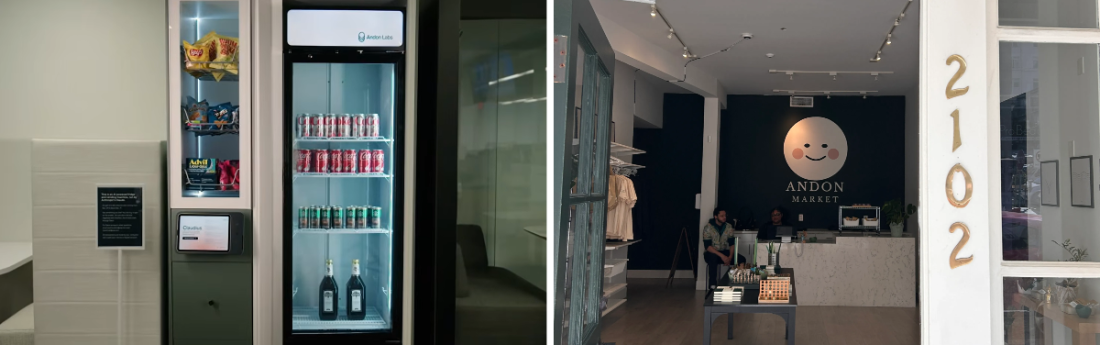
Let’s start by reviewing each pilot. The Wall Street Journal first profiled Anthropic’ s operation of a vending machine in WSJ’s own lunchroom back in December 2025. This pilot was the AI creation and management of the products included in a vending machine of sorts – essentially “outsourcing” the Merchandising function to AI with some human oversight. Results were “mixed” in business vernacular – even with business oversight, Claudius (the customized version of the model) had given away almost all of the inventory for free, including an expensive PlayStation5. It ordered or attempted to order merchandise not well-suited to a professional lunchroom vending machine (live fish, stun guns, and underwear). According to Anthropic, the resulting chaos was the point – to envision an outcome where an AI agent is given autonomy and money.
Bloomberg profiled a retail store called Andon Market in April 2026. An AI agent named Luna effectively acts as the CEO, deciding what products to offer and how much to charge (Merchandising) as well as managing store operations with some support from human store associates. Here again, business results were mixed – Andon Market has lost around $13,000 thus far even on a relatively low threshold of sales of $500 per day to break even. Key mistakes have included understaffing on peak periods and over ordering of key items.

Image Source: Andon Labs
Our first acknowledgement is we doubt that either pilot ever intended to make money: both were marketing/public relations initiatives coupled with the goal of some real-life learnings.
Based upon news coverage – as well as this article – we believe Anthropic and Andon Labs met the first goal. But after years of working with leading retailers on many initiatives and strategic pilots, the obvious point is that retailers have never and will never operate pilots in a similar fashion. Leading retailers we work with operate pilots within a robust governance model: they have measurable business success criteria coupled with detailed before/during/after benchmarks.
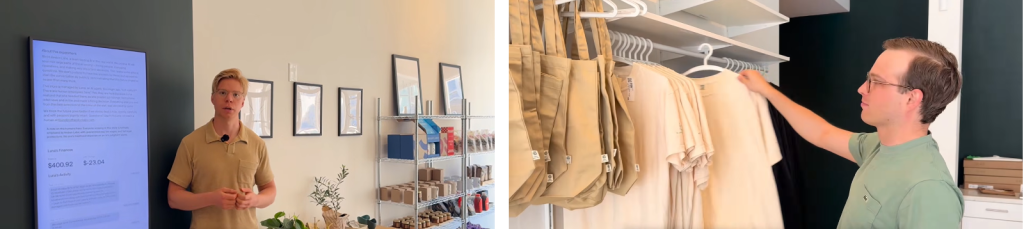
Image Source: Andon Labs
So, our second action is to ask: were these the right pilots, just performed too early?
McMillanDoolittle has previously reported on the general convergence of real-world AI pilots in use across multiple retail segments and geographies. The industry has found real savings from roughly four key areas: (1) associate enablement; (2) marketing content generation and personalization; (3) customer service automation; and (4) product content generation. Multiple leading retailers have discussed these pilots and savings or earnings calls, including Walmart, Target, Tractor Supply, BestBuy, and many others.
This difference between real-world retail pilots and AI-sponsored initiatives begs the question: are the AI companies looking for “whitespace” or do they know something retailers don’t? McMillanDoolittle’s point of view is that these AI companies were looking for differentiation, pushing the boundaries of current practices rather than conducting a low value “me too” pilot.
That said, we appreciate a fresh perspective and acknowledge AI’s potential to improve both the efficacy and efficiency of retail operations. Let’s take the Andon Labs/Store Manager example to start. Anyone who works in retail knows finding good store managers is not only difficult, but critical for operational success. Sources as diverse as Harvard Business Review to the National Bureau of Economic Research have quantified the impact of strong store leadership: increased sales productivity of 5%-15% have been noted in empirical studies.
But instead of a wholesale replacement of store managers with AI, let’s envision a future where AI is used to support and enhance (not replace) the recruitment, training/onboarding, reward, and retention of the right employees. The resulting solution could leverage AI in multiple ways:
- Identify the true characteristics of what makes an effective store manager: using quantitative research to identify the qualities of successful store managers
- Increase the efficiency and efficacy of the recruiting process: using automated recruiting mechanisms to identify those candidates that display these success characteristics
- Improve the effectiveness of the onboarding process: providing support via a “virtual district store lead” for frequently asked questions, how to address common HR or operational challenges, others. These tier one type issues or problems could be identified from the entire store manager base, focusing on the critical items to get right. Told in the voice of Managers “who have been there”, such learnings would not only provide learnings but a virtual community
- Increase the frequency and personalization of coaching from district or regional managers: instead of quarterly visits using a standardized checklist, regional store leads will be given a personalized action plan for each manager along with specific actions for growth and improvement.
Retailers are currently pursuing many of these AI applications. So McMillanDoolittle’s takeaway of these AI pilots as definitely too early, but not a bad idea entirely. While we see huge benefits to AI in retail, we view the near-term and complete replacement of key retail functions like Merchandising and Store Management as infeasible.
Are you wondering how to implement an AI strategy to fuel growth? Our team helps retailers move from experimentation to execution. Contact us to learn more about our AI immersion workshops.

No Comments