

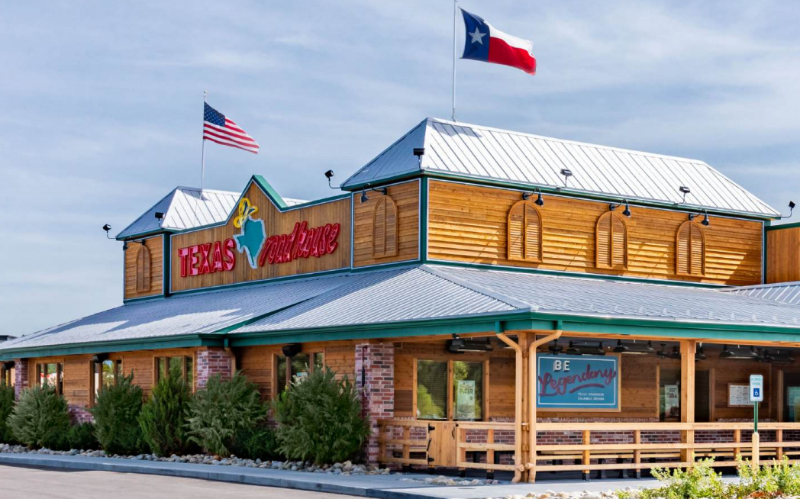
Texas Roadhouse: Winning at Retail in 2026
Retail and restaurant leaders spent the past several years navigating a brutal cost environment. Labor costs have risen. Food costs—particularly beef—have been volatile and elevated. Many operators have struggled to maintain margins while keeping traffic stable. Yet one brand has continued to outperform: Texas Roadhouse.
The company has quietly become one of the strongest operators in casual dining. Its stock performance reflects that strength. Over the past decade, Texas Roadhouse has delivered ~20% annualized returns, dramatically outperforming the S&P 500 and creating nearly 2x the shareholder value over the period. This is not luck. It is the result of disciplined execution.
Texas Roadhouse is a role model for retailers, restaurants and brands on what happens when a company consistently follows the principles of a strong Retail Execution Model.
The Retail Execution Model in Action
At its core, winning retailers and restaurant brands share three critical characteristics:
- A clearly defined target customer and market positioning
- A compelling experience that supports the positioning
- An operating model designed to deliver that experience consistently and profitably at scale.
Texas Roadhouse checks all three boxes.
- A Crystal-Clear Target Customer and Positioning: America’s Value Steakhouse for Everyday Celebrations and Family Dining
Texas Roadhouse knows exactly who it serves. The core customer is the value-oriented, middle-income family and group diner looking for high-quality food, generous portions, a fun and high-energy sit-down dining experience at a price point that still feels like a good deal. The customer is not looking for upscale dining or fast food or fast casual convenience. This target market is large and underserved.

Image Source: Texas Roadhouse Instagram
- A Compelling Experience that Supports the Positioning: Rituals, Engagement, and a Great Product
Texas Roadhouse delivers its value proposition through a series of intentional, repeatable experience elements. Rituals are designed into the experience to reinforce value, energy, and hospitality at every step of the journey, creating emotional connections with the guests. From the high energy greeting upon arrival to the warm fresh-baked rolls delivered when the guest is seated (with that tasty cinnamon honey butter!) to the classic peanuts and rowdy birthday/special occasion celebrations, these rituals reinforce the brand as a destination for memorable experiences, not just meals. The restaurant design puts the hand-cut steaks and from scratch kitchen prep on display, reinforcing the quality and craftsmanship image.
Texas Roadhouse uses technology selectively, focused on reducing friction, not replacing human interaction. Digital waitlists give customers control over wait times and Tabletop payment eliminates delays and improves convenience. The result is a smoother experience without sacrificing the brand’s high-touch feel.
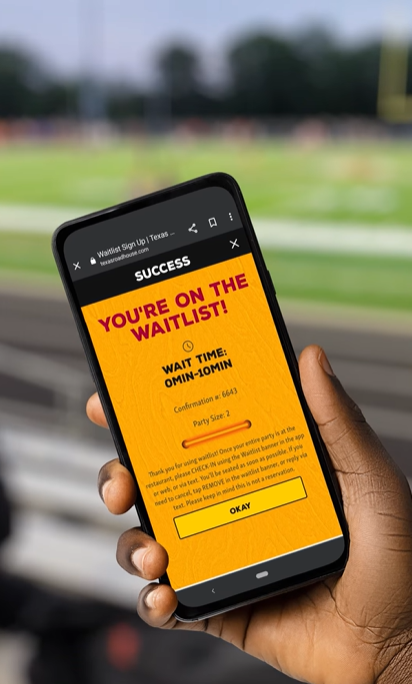
Image Source: Texas Roadhouse Instagram
- A Scalable, Profitable Operating Model supported by Culture
Texas Roadhouse’s success is grounded in its ability to deliver the same experience across hundreds of locations, profitably. Texas Roadhouse restaurants generate over $8 million in average annual sales, significantly higher than most casual dining competitors. Olive Garden for example, is at $6M-$7M per unit while Applebee’s averages $2.5-$3M per unit. These high volumes at Texas Roadhouse create structural advantages: Labor efficiency without sacrificing service, purchasing scale (critical in a high beef-cost environment) and the ability to maintain value pricing. While Texas Roadhouse continues to expand, much of casual dining is still retrenching. Red Lobster closed more than 100 locations as part of its bankruptcy restructuring, and even large operators like Darden have taken a more measured approach to unit growth amid ongoing cost pressures.
But execution at scale requires more than systems—it requires people. Texas Roadhouse, under the leadership of CEO Jerry Morgan, has built a culture where operators are empowered and accountable for delivering the experience. Many leaders rise from within the system, creating strong alignment between strategy and execution. They have invested in team development with a structured approach to building skills, coaching and team building at all levels within the organization.
The Flywheel: How It All Comes Together
Texas Roadhouse doesn’t just get these elements right individually—they reinforce each other. The system feeds itself. The experience drives traffic. The traffic drives economics. The economics sustain the experience.
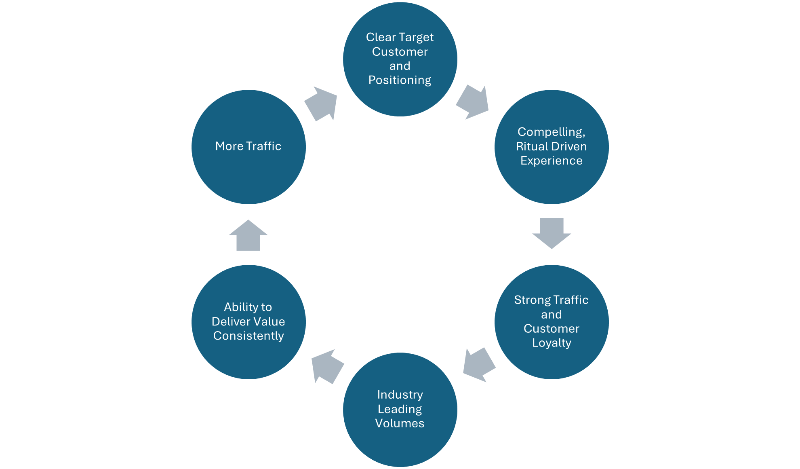
Image Source: McMillanDoolittle
In today’s environment, many brands are reacting tactically: Raising prices to offset costs, cutting labor to protect margins, adding promotions to drive traffic. Retailers like Texas Roadhouse that are winning in 2026 have taken a different approach: They have built a system where positioning, experience, and operations are aligned. As operators rethink how to balance value, experience, and profitability, the question becomes: how aligned is your model to consistently deliver all three? McMillanDoolittle has an over 35 year track record of helping retailers, brands and restaurants to refine their business models to win. Contact us to learn more.

No Comments