

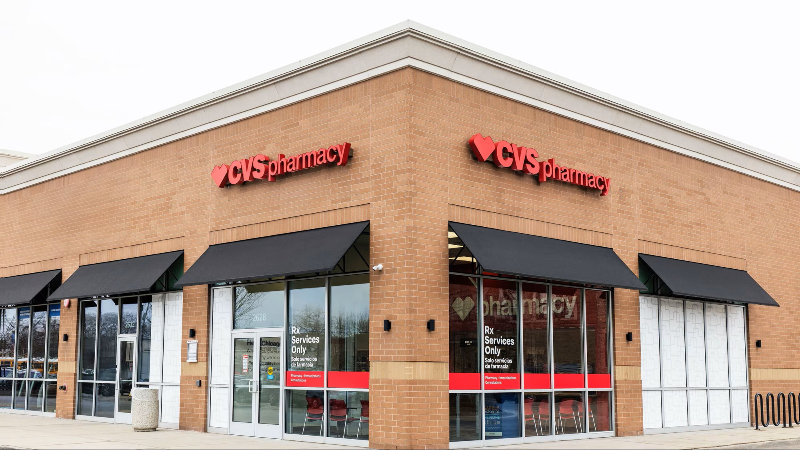
CVS Pharmacy-Only Stores: A Glimpse of the Future of Convenience
Earlier this week, CVS opened a pharmacy-only store in Chicago at 2628 West Pershing Road, the first of nearly 20 such locations the company plans to roll out across the U.S. this year. The pharmacy-only stores average around 3,000 square feet, which is considerably smaller than an average CVS that generally runs about 11,000 to 15,000 square feet. The “apothecary-style” stores are built around a full-service pharmacy, pharmacist consultations, immunizations, and a curated selection of over-the-counter items rather than the broader snack, beauty, and general merchandise mix found in a typical, full-size CVS. According to the company, the format is meant to bring pharmacy care closer to where patients live and make it easier to access medications and pharmacist support.
CVS first tested the smaller format late last year at a location in Birmingham, AL and is now set to scale the concept to nearly 20 additional sites in 2026 in cities including Houston, Detroit, and Brooklyn. This isn’t entirely new—Walgreens has been testing smaller-format, pharmacy-focused stores since 2019—but CVS’s push to scale a pharmacy-only model represents a more definitive shift, removing most of the front-end retail entirely. After more than 1,000 store closures between 2022 and 2025, CVS is now shifting back to selective growth, with about 60 new locations planned for 2026, including pharmacy-only stores. These smaller locations give the retailer a way to stay present in neighborhoods that need pharmacy access without carrying the full cost, complexity, and loss prevention risks of a large retail front end. It is also easier to fit a 3,000-square-foot format into dense urban areas and infill sites than a traditional drugstore footprint. Efforts to reshape the store base have spanned several years and this challenge is not unique to CVS. Walgreens has been working through its own turnaround, including a plan underway to close 1,200 stores over three years, a reminder that the traditional drugstore model is still under pressure across the sector.
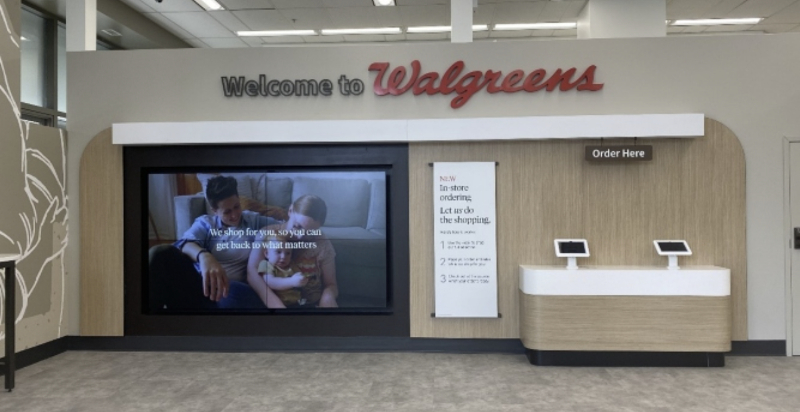
A Walgreens small format location opened in Chicago in 2023. Image Source: McMillanDoolittle.
Beyond right sizing the store fleet and format, department performance is another driver influencing the expansion of pharmacy-only stores. Same-store pharmacy sales rose over 19% in Q4 2025, driven by prescription volume and pharmacy mix, while front-store comp sales increased just 0.5% amid softer consumer demand at the front end of the store. For years, pharmacy has been the stronger engine while front-end retail has been the harder business to defend.
Philosophically, CVS, Walgreens, and the now-bankrupt Rite Aid have all had to rethink what “convenience” really means in a world where customers can get everyday items delivered within hours without setting foot in a store. CVS now offers delivery for many front-store purchases in as little as three hours, plus next- or two-day prescription delivery. Walgreens markets same-day delivery in as little as one hour. From a brick-and-mortar standpoint, it has become increasingly difficult for the traditional drugstore front end to win on convenience alone when cost-conscious consumers are less willing to pay a premium for merchandise they can just as easily buy online with free delivery from sites like Amazon.
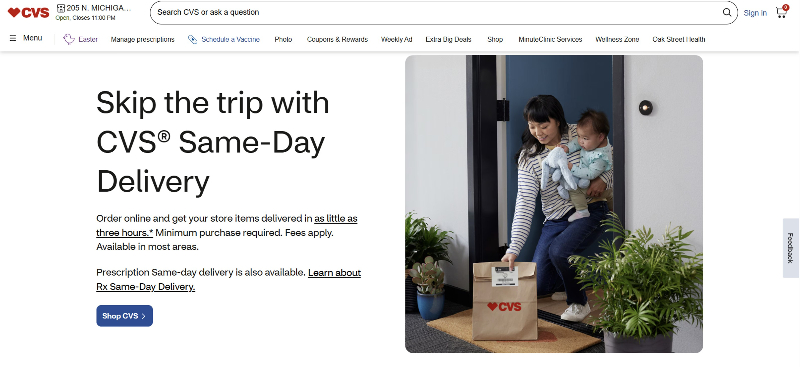
Image Source: CVS.com
However, what still matters, and what is harder to digitize away, is access to medications, immunizations, and trusted one-on-one consultations from a trained pharmacist. The company cited its own research, stating 80% of patients prefer face-to-face pharmacy care, 48% would switch pharmacies if limited to digital-only options, and 97% of pharmacy professionals say in-person interactions remain vital. So, while these stores are smaller, the proposition has shifted to be less of a convenience store and more of a neighborhood pharmacy, more akin to the standalone models common in other countries.
More broadly, this could be an early signal of where the industry is headed. The growth of pharmacy-only locations suggests a future in which pharmacy care moves closer to home, while much of the convenience retail mission moves online. If in fact shopper behavior continues trending in this direction, this smaller-format model may end up looking less like an experiment and more like an early preview of what the next chapter of pharmacy and convenience looks like in the U.S.
How are you thinking about store formats, service models, and convenience in your own business? McMillanDoolittle helps retailers and brands rethink concepts, footprints, and customer experience for the next phase of growth. Contact us to learn more.

No Comments