

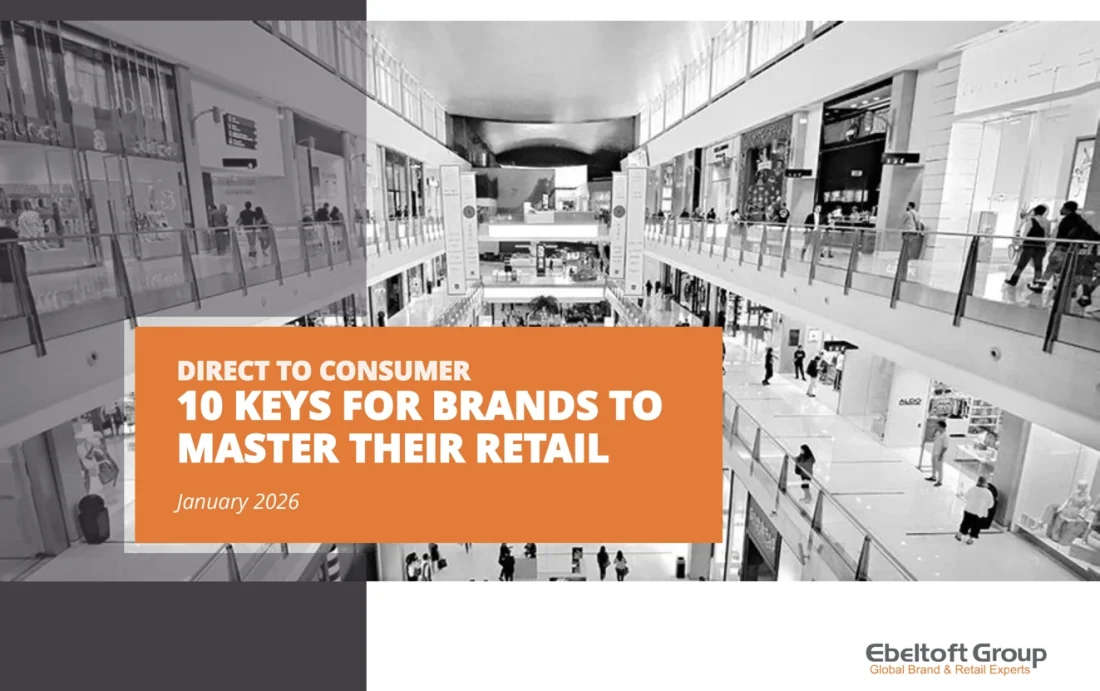
10 Keys to Building a Successful Direct-to-Consumer Strategy
Announcing the release of our Direct-to-Consumer Global Research Study
Download your copy of the research to explore the full report and underlying data.
Our latest global publication, developed in collaboration with our international Ebeltoft Group alliance, examines how traditional and DTC brands have embraced direct-to-consumer (DTC) strategies to complement their traditional wholesale or digital channels over the past decade. The success stories of global leaders like Nike, Apple, LEGO, and many other brands have inspired countless companies to follow suit. Yet behind these high-profile examples lies a more complicated reality: many brands struggle to make DTC profitable – hence our focus on driving profitable growth in DTC strategies.
Drawing on real-world transformations across more than ten global brands—from wholesale leaders like Salomon and Kave Home to digital pioneers like Knix and Vuori—Ebeltoft Group consultants have identified ten critical factors that determine DTC success.
Strategic foundations
1. Strategic ambition clarity – The role of DTC should be clearly defined: is it a marketing took, an additional channel, or a full strategic transformation?

Image Source: Ebeltoft Group
2. Product-category fit – DTC works best for products that are emotional, complex, or experience-driven
Customer and Brand
3. Customer-first operating model – Shift from a wholesale mindset to building meaningful human connections and direct, individualized customer relationships while removing friction from the journey
Customer Relationships
4. Brand integrity – Maintain consistent pricing and brand positioning across all channels, especially marketplaces
5. Data infrastructure and lifetime value – Use digital ecosystems to capture first-party data and proprietary knowledge to build deeper customer relationships
Execution and Enablers
6. Economic model redesign – Balance improved margins with the increased costs of customer acquisition, operations, and capital investment
7. Channel orchestration – Create synergies by clearly defining the role of each channel
8. Operational transformation – Unlike wholesale, DTC requires real-time data, responsive supply chains, and retail-grade IT systems
9. Organizational capabilities – Develop new skills, faster decision-making, and a culture aligned with retail operations
Future Outlook
10. AI shopping agents – Prepare for a future where AI-driven shopping assistants influence brand visibility through content relevance
While DTC can deliver strong results, it should not be seen as a one-size-fits-all solution. Success will depend on a company’s ability to objectively evaluate the strength of their brand, product-market alignment, and organizational readiness; and follow through on all of the executional elements to drive profitable growth.
To dive deeper into the research or to schedule a presentation of the results with our team, get in touch with us. Access our previous global whitepapers here.
About Ebeltoft Group
Ebeltoft Group is a global alliance of independent retail and consumer brand consultancies spanning Europe, the Americas, Asia-Pacific, and Africa. Our teams partner with brands to turn strategic ambition into profitable execution, from channel strategy and economic modeling to operational and organizational transformation.

No Comments