


Why Amazon Is Refocusing Its Grocery Strategy
Amazon’s announcement that it will close all its Amazon Fresh and Amazon Go stores may sound, at first glance, like a retreat from grocery. More broadly, it’s perhaps better understood as a strategic refocus toward where Amazon is most differentiated, and an acknowledgment of how much the grocery landscape has changed over the years. McMillanDoolittle’s Amanda Lai joined Chicago’s WGN-TV to discuss the company’s decision to close Amazon-branded brick-and-mortar stores in a recent news segment.
At a high level, the brick-and-mortar closures themselves aren’t especially surprising. Amazon Fresh struggled to meaningfully differentiate itself in a crowded grocery landscape or clearly articulate why customers should choose it over existing options. While the in-store technology—Dash shopping carts, Just Walk Out, Alexa, Amazon One palm payments (which also just got axed)—was novel, the physical stores never fully found their footing with shoppers and lacked the warmth or experiential angle of its competitors.

Amazon Fresh in Ladera Heights, CA. Image Source: McMillanDoolittle
Amazon has a long history of experimentation: launching ideas, testing and learning, and then moving on when concepts don’t scale. We’ve seen this before with retired initiatives like in-home Dash buttons, the Amazon Style clothing store, and the Amazon Fire smartphone. Amazon Fresh and Amazon Go (may they rest in peace) fit into that pattern.

The location in Factoria, WA was the first Amazon Fresh to debut a fully Just Walk Out store. Image Source: McMillanDoolittle
While the stores themselves didn’t scale as Amazon originally envisioned, they played an important role in fueling innovation elsewhere in the business. Amazon Go helped accelerate the development of Just Walk Out technology, which has since become a separate, licensable revenue stream now used by hundreds of third-party retailers, ranging from airports to stadiums. Similarly, Amazon Dash smart shopping carts, which debuted at Amazon Fresh, have reached its third-generation model and are now being tested inside Whole Foods locations and licensed out to grocery chains like Price Chopper.
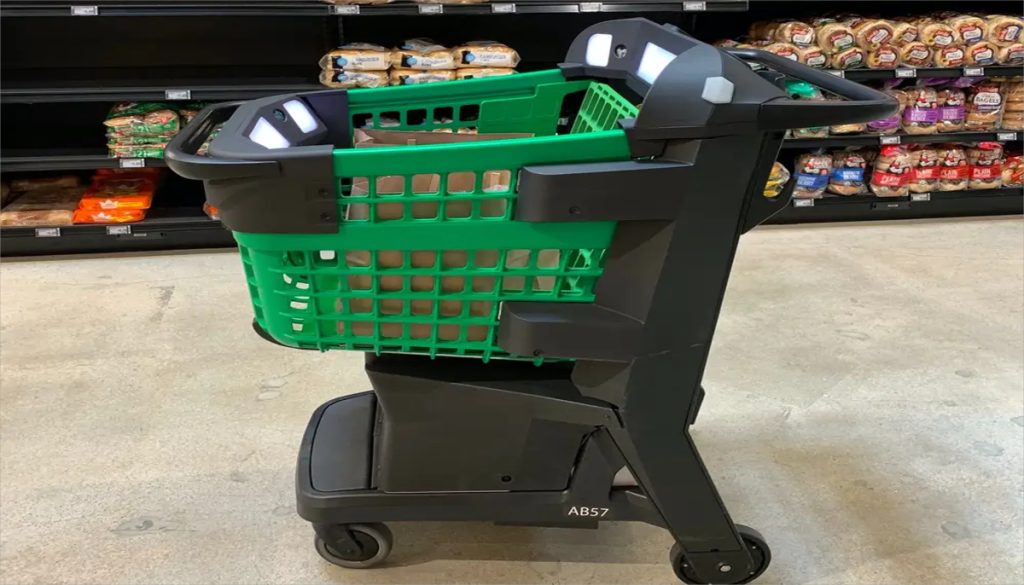
The first generation Amazon Dash cart debuted inside the first Amazon Fresh location in 2020. Image Source: McMillanDoolittle
It’s also important to remember the context in which Amazon entered brick-and-mortar grocery. The company acquired Whole Foods Market for $13.7 billion in 2017, in a grocery landscape dominated by players like Kroger, Albertsons, and Walmart. The Amazon Fresh grocery concept was conceived in this pre-pandemic era as Amazon’s bid to go head-to-head with these conventional incumbents.
Fast forward to today, consumer priorities around food look very different. In a post-pandemic environment (and after a failed Kroger-Albertsons mega-merger), where the consumer landscape is shaped by heightened health awareness and the rise of GLP-1s, Whole Foods is particularly well positioned to continue to grow. In a recent conversation we had with Whole Foods leadership at the first-ever Amazon Grocery Analyst Day, they noted that while their core shopper has long been health-conscious and not necessarily a GLP-1 user, they’ve seen increased interest from this secondary GLP-1 customer group that is eating less overall but turning to Whole Foods for more nutrient-dense, high-quality foods to meet their nutritional needs.

Whole Foods Experiential Lunch at the first-ever Amazon Grocery Analyst Day in 2025. Image Source: McMillanDoolittle
By contrast, Amazon Fresh never fully cracked brick-and-mortar grocery. Grocery retail is notoriously complex, requiring deep expertise in store design, merchandising, fresh execution, and local nuance. Many of Amazon’s strongest competitors are heritage or family-owned brands that have built trust with customers over generations. At times, Amazon Fresh stores felt more like convenient hubs for package returns or like order-picking facilities that happened to be open to the public, rather than neighborhood grocery stores. While the in-store technology was innovative, the stores themselves lacked differentiation that meaningfully resonated with today’s shopper. The decision to close these locations reflects an acknowledgment of the heavy lift required to bring Amazon Fresh to the same level as Whole Foods or its long-established grocery competitors.

Customer Service section at the first Amazon Fresh location in Woodland Hills, CA. Image Source: McMillanDoolittle
Strategically, it’s far easier to continue building on the brand equity of a decades-old banner like Whole Foods than to keep investing in a newer brand from the ground up. The company recently announced plans to open more than 100 new Whole Foods Market locations over the next few years, including expansion of its smaller-format Whole Foods Market Daily Shop concept. Initially positioned as a convenient, fill-in shop at around 10,000 sq. ft., Daily Shop has delivered better-than-expected early results and is now set to double its store count to 10 locations in 2026, driven by stronger full-basket shopping occasions than originally anticipated.
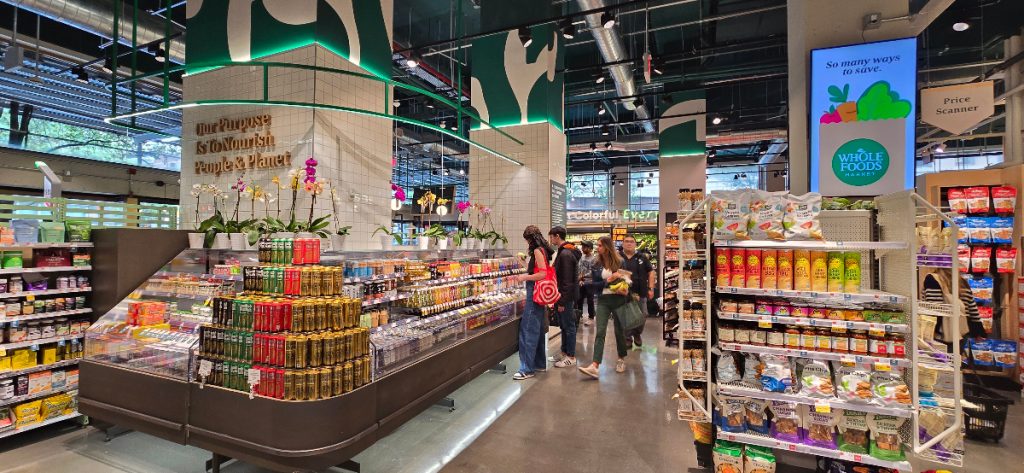
The first Whole Foods Daily Shop opened in Lenox Hill, NY in 2024. Image Source: McMillanDoolittle
Today, the company already generates over $150 billion in gross grocery sales annually. What’s changing is not Amazon’s commitment to grocery, but how it chooses to compete. Recent announcements around expanded same-day and rapid delivery of perishables to thousands of U.S. cities highlight where Amazon has a clear advantage. The average consumer doesn’t naturally associate Amazon with brick-and-mortar supermarkets, but they do strongly associate the brand with speed and convenience, areas where Amazon is already best in class with its free 2-day and same-day delivery options for Prime members.
Taken together, the closure of Amazon Fresh and Amazon Go stores doesn’t signal failure in grocery so much as a strategic realignment. Amazon is doubling down on Whole Foods in physical retail to serve the health-conscious consumer, while leaning on its leading logistics capabilities to compete in conventional and online grocery. Ultimately, this move reflects a tough, but clear-eyed assessment of reality. Amazon doesn’t need to win grocery everywhere to win in grocery. It needs to dominate where it is best positioned to win.
For more Amazon coverage, check out our other blogs on the opening of Amazon Grocery in Chicago and Whole Foods Daily Shop in New York.

Neil Stern
February 10, 2026 at 6:04 pmAmanda, you’ve probably been in more of their concepts than a number of Amazon executives…nice recap. Their journey continues
Pingback:The Next Wave of Natural & Organic Grocery Expansion - McMillanDoolittle - Transforming Retail
March 11, 2026 at 7:44 am