

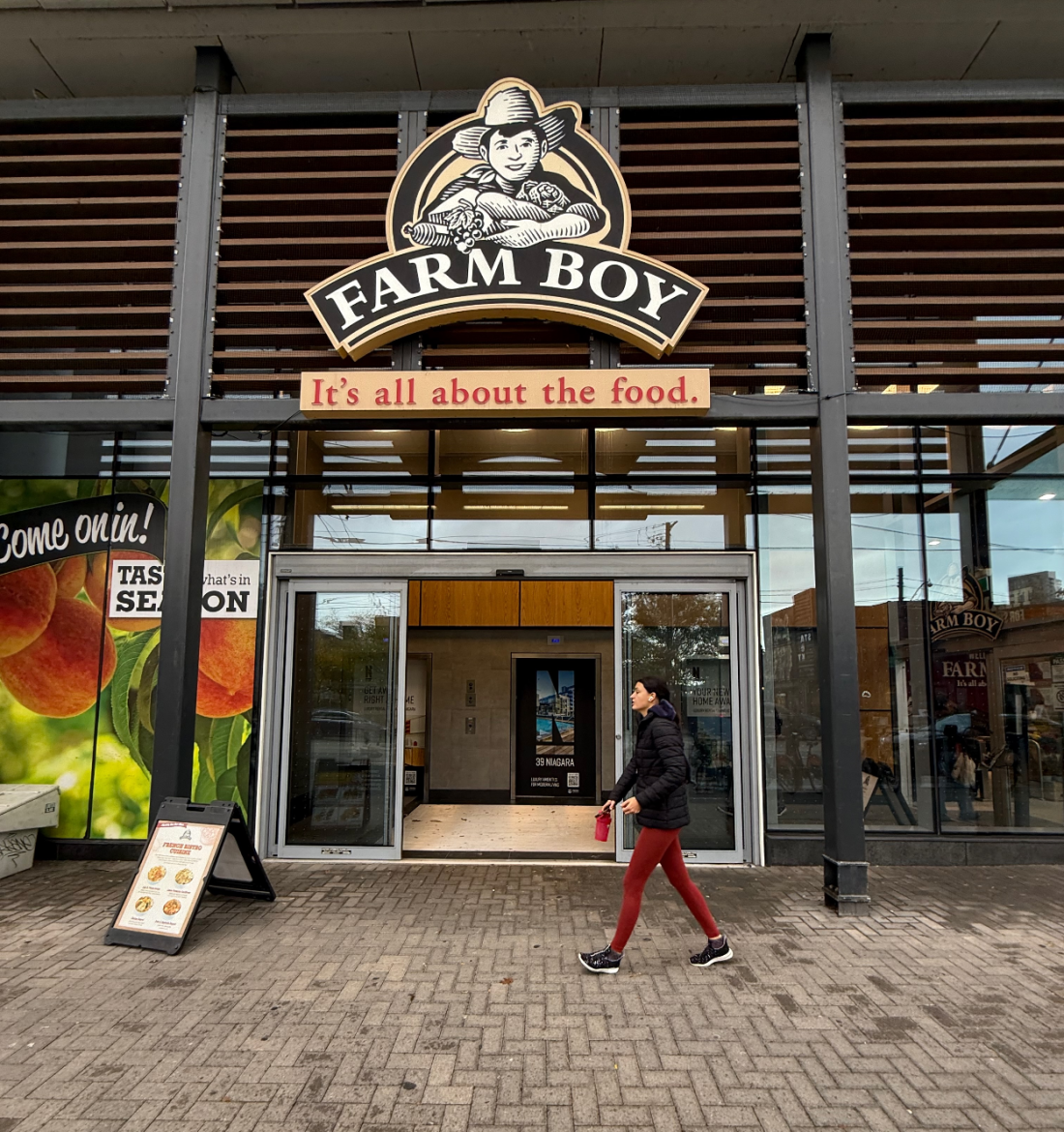
Farm Boy’s Fresh Take on Canadian Grocery Retail
If you ask Canadian food lovers to describe Farm Boy, you’ll hear a familiar line: “It’s like if Whole Foods and Trader Joe’s had a baby.”
They’re not wrong. On a recent visit to a Farm Boy at Wellington Place in Toronto we can report that Farm Boy combines Whole Foods’ fresh, food-first merchandising with Trader Joe’s obsession for unique items and beloved private label products. Layer on tight editing of categories, strong in-store signage, and a relentlessly local, friendly vibe, and you get one of the most distinctive grocery concepts in Canada.
Farm Boy started in 1981 as a 300-square-foot produce shop in Cornwall, Ontario, opened by Jean-Louis and Collette Bellemare. The early focus was simple: fresh produce and friendly service. As the business grew, the assortment expanded into dairy, deli, cheese, meat, bakery, and bulk foods, while keeping the “fresh market” feel. Today, Farm Boy is headquartered in Ottawa and operates 51+ specialty grocery stores, all in Ontario, with additional locations already in the pipeline.
In 2018, Empire Company Limited—the parent of Sobeys—acquired Farm Boy in an ~$800M CAD deal, positioning Farm Boy as a growth banner and innovation vehicle within the broader portfolio. Farm Boy stands out in Canada’s crowded grocery market:
- “It’s All About the Food”: A Fresh-Market Store, Not a Full-Shop
Farm Boy’s slogan is “It’s All About The Food.” Stores are smaller than conventional supermarkets and intensely food-centric. They showcase:
- Big, theatrical produce displays
- A deep prepared foods offer (hot bar, salad bar, grab-and-go meals, chef-prepared dinners)
- Robust deli, bakery, cheese, and meat departments.
What you won’t find is just as important. Farm Boy is not a full-shop supermarket—and doesn’t try to be. Certain center-store or non-food categories are limited or absent altogether. Shoppers typically use Farm Boy as:
- A primary stop for fresh, prepared, and specialty items
- A complement to a larger conventional grocery shop for commodity items.
That deliberate focus mirrors Whole Foods’ food standards and perimeter theatre, but in a more compact, value-oriented environment—very much like Trader Joe’s, where edited assortments are part of the brand promise.
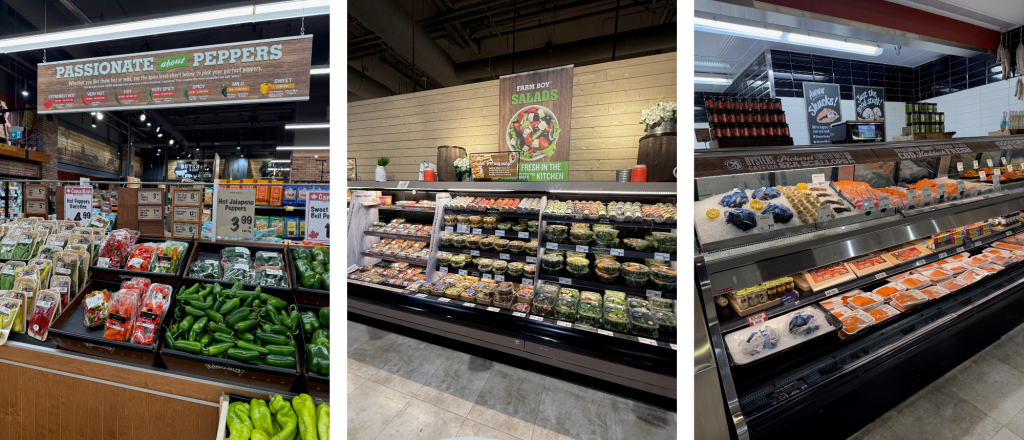
Photo Credit: McMillanDoolittle
- Signage, Storytelling, and Customer Communication
Walk into a Farm Boy and you’re hit with bold, informative signage that does more than give a price. The brand’s new “A Farm Boy Fresh Twist” platform leans into turning grocery shopping into a fun, fresh-market experience, with messaging woven across in-store displays, hero videos, and creative point-of-sale.
Signage often explains how products are sourced (local farms, Ontario producers), calls out dietary attributes like vegan, gluten-free, plant-based and adds personality via puns and conversational copy (“We do the prep, you take the credit”). That same tone—educational yet cheeky—is a clear echo of Trader Joe’s hand-lettered chalkboards and Whole Foods’ ingredient storytelling.
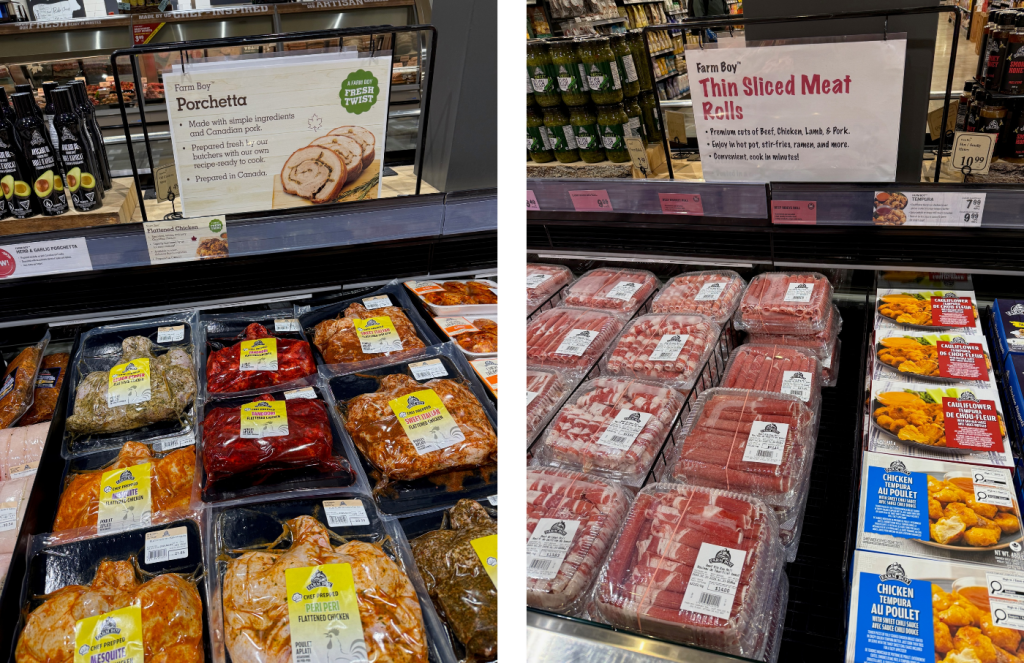
Photo Credit: McMillanDoolittle
- Private Label as a “Reason to Visit”
Like Trader Joe’s, Farm Boy has turned its own-brand line into a cult following. The chain offers hundreds of Farm Boy–branded items across fresh, frozen, grocery, and snacking. These private label favorites keep customers coming back for more citing the “value connection” and exclusivity of Farm Boy products as a key driver of loyalty.
Farm Boy’s sweet spot is the urban and suburban food enthusiast—someone who:
- Cares about freshness, quality, and local sourcing
- Wants a more engaging shopping trip than a conventional big-box grocery store
- Is willing to pay a slight premium for better food, but still expects a good value.
The banner’s growth has been focused on Ontario’s higher-density, higher-income markets—Toronto, Ottawa, and growing commuter suburbs—often in mixed-use developments and urban malls. Its strong emphasis on value and private label—especially in a high-inflation environment—helps broaden the audience beyond just affluent shoppers.

Photo Credit: McMillanDoolittle
Owned by Sobeys, But Operated Like a Specialist
When Empire acquired Farm Boy, the stated strategy was to let it run independently while leveraging Empire’s scale. In practice, that looks like:
- Separate branding and merchandising: Farm Boy stores retain their unique look, assortment and operating culture, distinct from Empire’s other banners.
- Focused geography: Rather than rolling it out coast-to-coast, Empire is concentrating Farm Boy in Ontario, adding stores in key markets and selectively converting some Sobeys stores to Farm Boy banners.
- Innovation lab for the group: Farm Boy serves as a place to test fresh merchandising, private label development, and experiential concepts that can inform broader Empire strategy.
The benefit for Empire is a high-growth, specialty banner that doesn’t get bogged down in the legacy constraints of the core chain. The benefit for Farm Boy is having capital and infrastructure support without losing its entrepreneurial, food-first ethos.
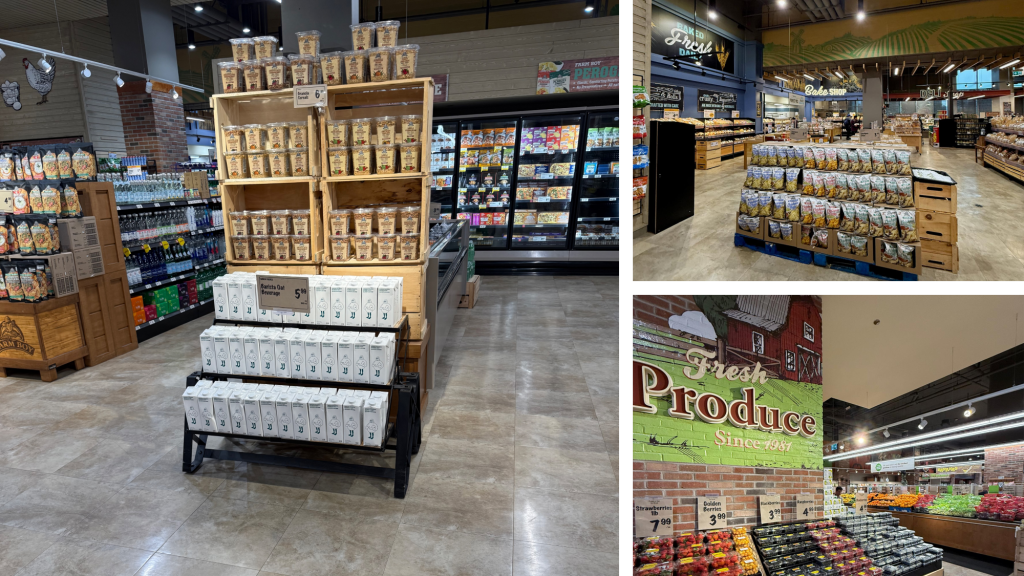
Photo Credit: McMillanDoolittle
Empire’s approach mirrors a broader industry shift toward portfolio-based strategies—similar to Kroger’s and Ahold Delhaize’s multi-banner structures in the U.S.—where each banner plays a specific role in the shopper’s total ecosystem. In this context, Farm Boy fills Empire’s need for a high-growth, specialty format that appeals to urban, higher-income shoppers while influencing perimeter innovation across the entire enterprise. It effectively acts as a “learning lab,” giving Empire a competitive tool against full-line rivals like Loblaw and Metro, whose specialty formats aren’t scaling at the same pace.
Digital and Omnichannel: Light Front End, Heavy Back End
On the surface, Farm Boy still feels like an in-store-first brand. The website leans heavily into storytelling, weekly flyers, and a modest online shop with chef-prepared meals and catering, rather than a full end-to-end grocery e-commerce experience.
But behind the scenes, Farm Boy is plugged into Empire’s ambitious digital ecosystem:
- Voilà by Sobeys: Empire’s Ocado-powered e-commerce platform allows customers to shop Sobeys, Farm Boy, and Longo’s products on a single site and app, with automated fulfillment and home delivery.
- Shared infrastructure, distinct brand: Farm Boy SKUs are integrated into Voilà’s catalog, but the Farm Boy brand still shows up as a unique option within the broader assortment.
Taken together, Farm Boy’s digital strategy is high-touch, theatre-rich stores, complemented by a scalable, multi-banner e-commerce engine owned by the parent. Digital is a convenient extension for loyal customers and a way for Empire to unlock more share of wallet.

Photo Credit: McMillanDoolittle
Farm Boy’s digital approach also reflects a broader consumer pattern in Canada: despite strong e-commerce penetration during the pandemic, Canadian grocery shoppers have largely reverted to in-store-first behaviors. According to industry research, Canada’s online grocery penetration has stabilized at under 10%, one of the lowest among developed markets. Farm Boy’s choice to maintain a lighter digital storefront—while leveraging Empire’s Ocado-powered back end—aligns well with this reality. It allows the banner to stay focused on theatrical, perimeter-driven retail, while still participating in the long-term growth of e-commerce through Voilà.
Why Farm Boy Matters in the Evolving Grocery Landscape
The Farm Boy model offers a compelling blueprint for grocery’s future:
- Specialization over “one-stop shop”: Clearly defined boundaries (what you don’t carry) sharpen the brand and keep stores easy to shop.
- Private label as a brand engine: Exclusive products that shoppers crave turn a grocery trip into something closer to a treasure hunt.
- Experience and communication as differentiators: Signage, storytelling, and human service help justify a price premium and build emotional loyalty.
- Parent-child synergy done right: Empire’s role shows how a major chain can support, rather than dilute, a strong specialty banner.
Farm Boy’s continued momentum offers a counterpoint to the dominant playbook in Canadian grocery, where most growth has come from price formats, operational scaling, and discount banners. Farm Boy shows that highly curated, food-first concepts can thrive—even in an inflationary environment—when the brand promise is clear, the assortment is disciplined, and the experience feels genuinely local. Farm Boy is proof that there’s still plenty of room to grow by focusing on the fundamentals: know your customer, know your role in their overall shopping mission, and make every visit “all about the food.”

No Comments